 EN
EN

























































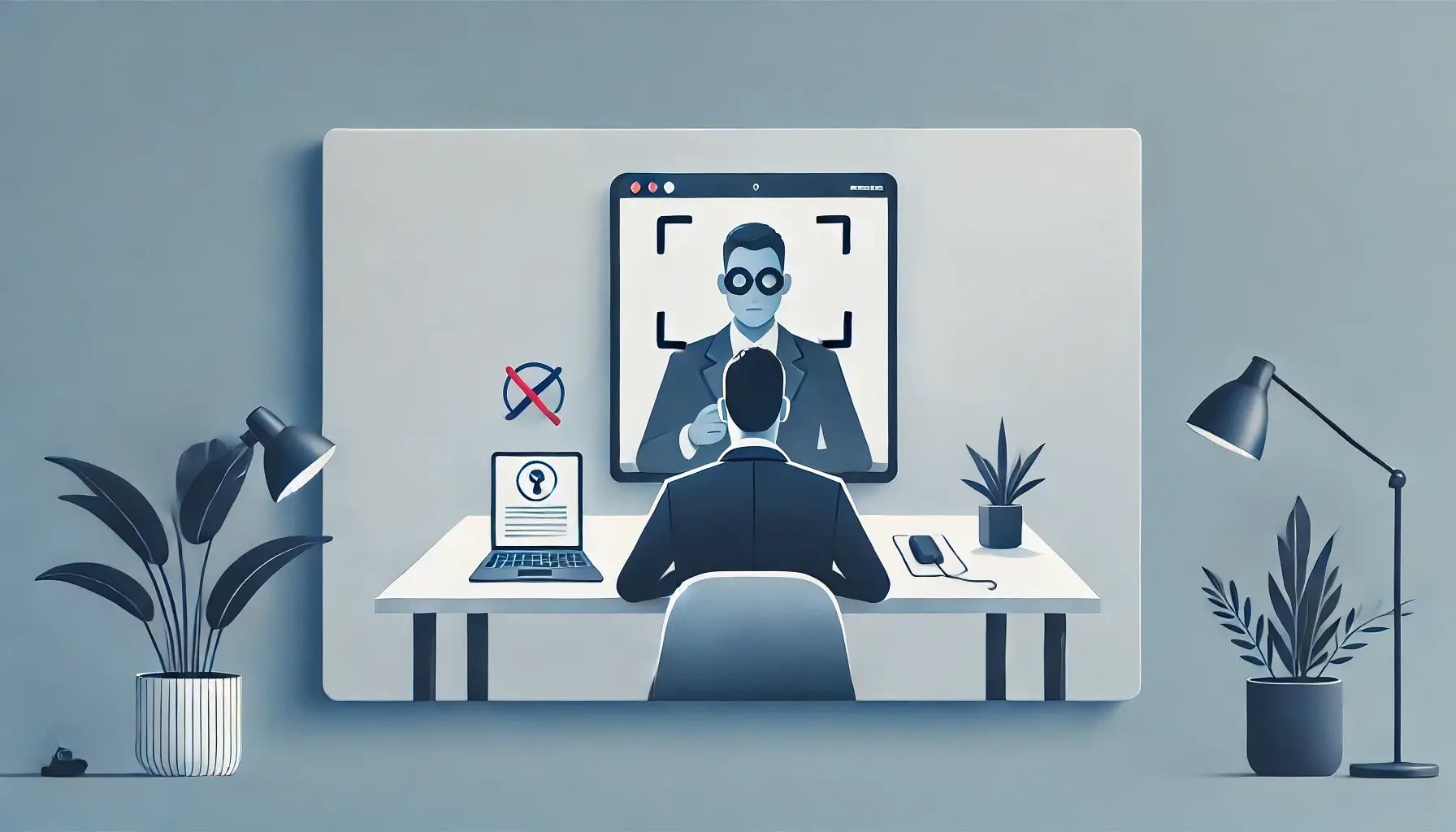
Virtual interviews have become a standard part of modern hiring — but they’ve also opened the door to a rise in virtual interview cheating. From AI-generated answers to full proxy participation, fraudulent activity in remote hiring can undermine assessment accuracy and lead to costly mis-hires.
To protect hiring integrity, recruiters need a combination of smart technology, secure interview environments, and real-time monitoring. Below is a concise guide to today’s most common cheating tactics and how Talview Interview Rooms helps stop them before they impact your hiring decisions
Common Types of Virtual Interview CheatingCheating in online interviews has evolved quickly. Recruiters now face both traditional and AI-driven forms of fraud, including:
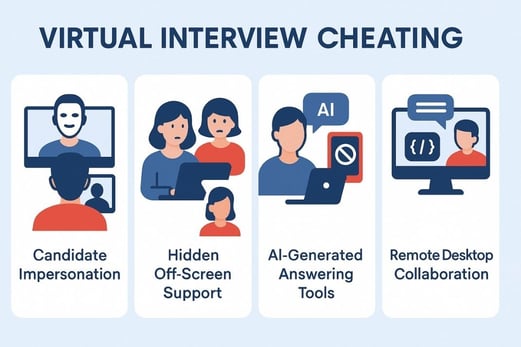
1. Candidate Impersonation
Someone else joins the interview pretending to be the applicant. This is increasingly common in technical roles and contract positions.
2. Hidden Off-Screen Support
Candidates may have another person in the room feeding them answers from behind the camera.
3. Use of Secondary Devices
Mobile phones, tablets, or side screens are often used to search for answers, read scripts, or communicate with external helpers.
4. AI-Generated Answering Tools
Candidates rely on:
- Generative AI for real-time responses
- Coding autocompletion tools
- AI interview assistants
These tools allow candidates to bypass real problem-solving.
5. AI Teleprompters
Teleprompter extensions display scripted answers directly on the screen, making it difficult for interviewers to detect reading behavior.
6. Remote Desktop Collaboration
Candidates quietly share their screen with an expert who solves problems for them a method on the rise in technical interviews.
How Talview Helps Prevent Virtual Interview Cheating
Talview Interview Rooms is built specifically to secure live and asynchronous interviews with powerful anti-cheating capabilities. Here’s how it ensures authenticity at every stage:
1. Lockdown Browser for a Secure Interview Environment
Talview’s Lockdown Browser prevents candidates from:
-
Switching tabs
-
Opening new applications
-
Accessing coding tools or AI assistants
-
Using screen-sharing or collaboration plugins
This creates a controlled, distraction-free environment and significantly reduces opportunities for external help.
2. Comprehensive Candidate Verification
Identity fraud is one of the biggest risks in online hiring. Talview combats this with multi-factor candidate verification that includes:
-
Face recognition
-
Voice biometrics
-
Device fingerprinting
Verification occurs before and during the interview to ensure that the same, real candidate is participating throughout.
3. Environment Scan for Location Integrity
Interviewers can request a 360-degree environment scan to check:
-
Whether another person is in the room
-
If unauthorized materials are present
-
Whether external monitors or devices are visible
This helps enforce a clean and compliant interview space.
4. Real-Time Device Connection & Behavior Alerts
Interview Rooms automatically notifies interviewers of suspicious activity, such as:
-
Camera turning off
-
Multiple microphones detected
-
Additional devices or displays connected
-
Sudden camera or browser switching
These alerts allow interviewers to intervene immediately and maintain interview integrity.
5. Secondary Camera Support
For high-stakes or technical roles, Interview Rooms supports adding a second camera view, giving interviewers better visibility into the candidate’s surroundings and minimizing the chance of hidden assistance.
6. Collaborative Interviews with Additional Panel Invites
Fraud becomes easier to detect when more eyes are on the interview. Talview allows recruiters to easily bring in panel members or subject matter experts, making it more difficult for candidates to cheat undetected.
Additional Tips for Recruiters to Identify Cheating
Alongside technology, recruiters can watch for behavioral cues:
Monitor Eye Movements
Frequent side glancing or reading patterns can indicate scripted responses or off-screen prompts.
Listen for Delayed Responses
Long pauses — especially from candidates wearing earphones — may signal they’re receiving external help.
Ask Application-Based Questions
Probe deeper with “how” and “why” scenarios that require real experience, not memorized answers.
Communicate Expectations Clearly
Setting rules at the start of the interview reduces the likelihood of cheating attempts.
Conclusion
Virtual interview cheating is becoming increasingly sophisticated, but modern recruiting teams don’t have to face it alone. With advanced capabilities like a lockdown browser, environment scans, multi-factor verification, real-time alerts, and secondary cameras, Talview Interview Rooms offers the strongest defense against virtual interview fraud.
Protect your hiring decisions, ensure fairness, and confidently identify the best talent with a secure, end-to-end interviewing platform.






Leave a Reply